
Have you ever looked at a dull wall or a bare corner in your home and thought, “This space could use some life”? That’s where vertical gardening steps in. Vertical gardening is the practice of growing plants upward, using walls, trellises, stacked containers, or modular systems instead of relying solely on traditional ground-level gardens.
In today’s fast-paced urban lifestyle, where space is often limited, vertical gardening offers a smart, stylish, and eco-friendly solution. It’s not just a gardening trend—it’s a revolution in how we design homes, balconies, and even office spaces.
Benefits of Vertical Gardening
- Space-Saving Solution
Traditional gardening requires wide plots of land, but vertical gardens thrive in small balconies, kitchen corners, or even narrow hallways. They let you grow more plants in less space. - Enhances Air Quality
Plants act as natural air purifiers. A green wall can reduce pollutants, absorb carbon dioxide, and release fresh oxygen, making your living space healthier. - Boosts Aesthetics & Property Value
A living wall instantly transforms a dull space into a breathtaking green feature. In fact, homes with vertical gardens often have higher property appeal. - Supports Physical & Mental Health
Being around plants lowers stress, boosts mood, and encourages relaxation. Imagine having a lush herb wall near your kitchen—it’s both calming and practical. - Food Security in Urban Spaces
With vertical gardens, you can grow fresh vegetables, herbs, and fruits, reducing grocery costs and ensuring pesticide-free produce.
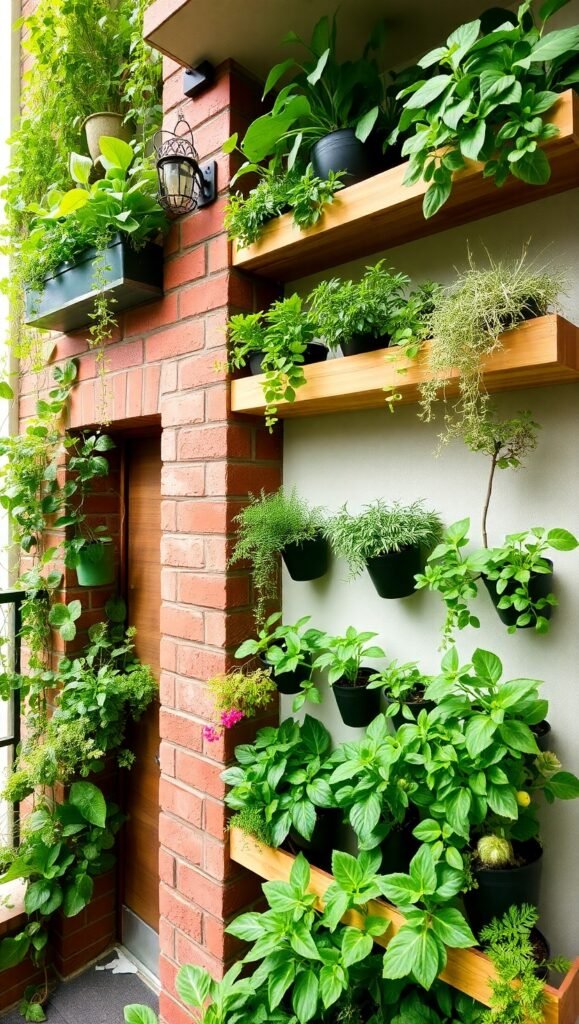
Types of Vertical Gardens
- Indoor Vertical Gardens – Perfect for apartments, these include wall-mounted herb gardens or hydroponic towers for fresh greens.
- Outdoor Vertical Gardens – From backyard fences to patio walls, these large-scale installations are both decorative and functional.
- Hydroponic Vertical Gardens – Soil-free, water-efficient systems that are great for vegetables and herbs.
- Modular Panel Systems – Ready-to-use frames with built-in slots for plants.
- Green Facades – Climbing plants that grow along walls or trellises, covering buildings in greenery.
Best Plants for Vertical Gardening
- Beginner-Friendly Plants – Pothos, philodendrons, spider plants, and ferns are hardy and forgiving.
- Flowering Plants – Begonias, petunias, geraniums, and nasturtiums add vibrant colors.
- Herbs & Edibles – Basil, mint, rosemary, lettuce, cherry tomatoes, and strawberries thrive vertically.
- Low-Maintenance Options – Succulents, air plants, and cacti require minimal watering and care.
Creative Vertical Gardening Ideas
- DIY Pallet Gardens – Turn old wooden pallets into rustic wall planters.
- Hanging Planters – Stylish baskets suspended with ropes or metal chains.
- Wall-Mounted Pots – Neatly arranged ceramic or clay pots create a modern garden wall.
- Pocket Fabric Planters – Vertical felt pockets for herbs or leafy greens.
- Recycled Bottle Planters – Eco-friendly and budget-friendly option.
- Trellises for Climbers – Support for vines like ivy, jasmine, or climbing roses.
- Living Green Walls – A dramatic, full-wall installation of mixed plants.
- Hydroponic Towers – Grow fresh veggies indoors without soil.
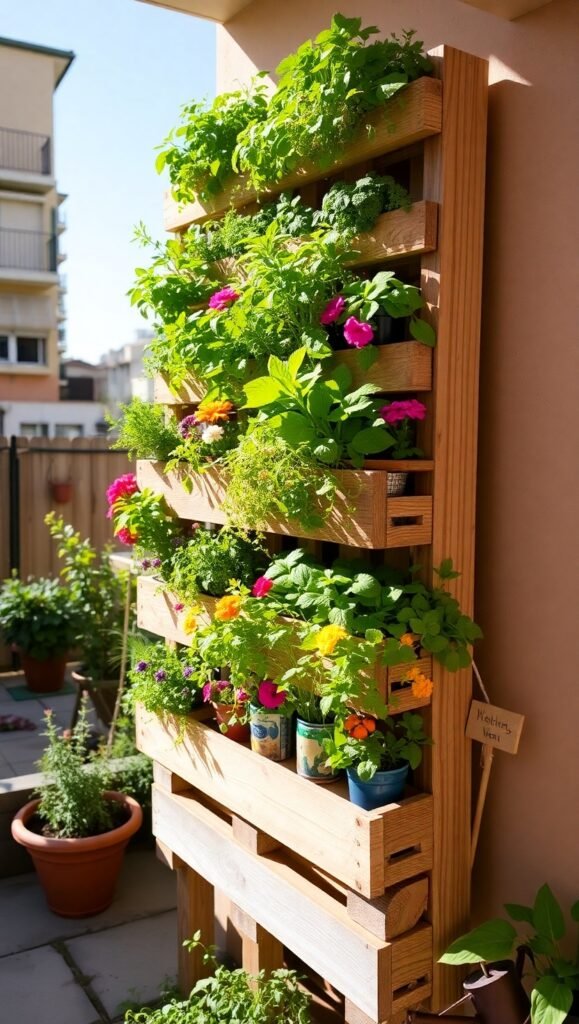
Designing Your Vertical Garden
A successful vertical garden is both beautiful and functional.
- Location Matters – Indoor gardens need bright indirect light, while outdoor gardens may need full sun.
- Sunlight & Shade – Match plants to lighting conditions. For example, herbs like basil love full sun, while ferns prefer shade.
- Colors & Textures – Mix leafy greens with flowering plants for balance.
- Patterns & Layouts – Arrange plants in gradients, stripes, or shapes to create living artwork.
- Integration – Blend vertical gardens into your interior design or outdoor theme.
How to Build a Vertical Garden Step by Step
- Select a sturdy wall or frame.
- Install containers, pallets, or modular panels.
- Add soil (or hydroponic system).
- Plant herbs, flowers, or vegetables.
- Set up drip irrigation or a self-watering system.
- Maintain regularly with pruning, fertilizing, and replanting.
Vertical Gardening for Apartments
Small-space living doesn’t mean you can’t have greenery.
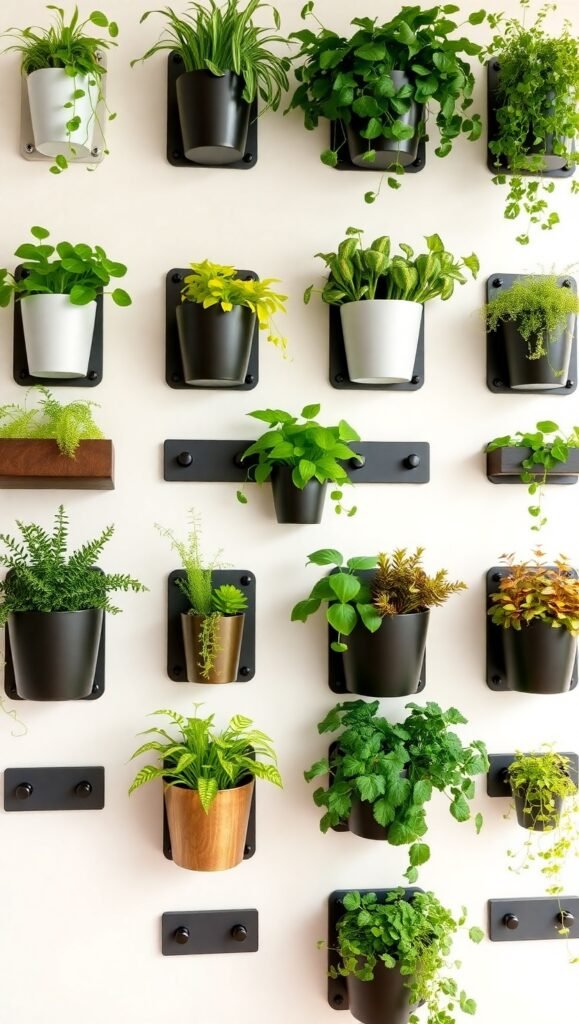
- Balcony Gardens – Use railing planters, hanging baskets, or pallet walls.
- Kitchen Herb Walls – Fresh basil, mint, and parsley at your fingertips.
- Window Planters – Compact, lightweight containers for sun-loving herbs.
- Compact Hydroponic Systems – Perfect for growing lettuce indoors year-round.
Outdoor Vertical Gardening Inspirations
- Backyard Green Walls – Stunning features that double as privacy screens.
- Fence-Mounted Gardens – Transform fences into lush, living walls.
- Vertical Vegetable Patches – Grow tomatoes, beans, and cucumbers vertically.
- Patio Vertical Gardens – Create cozy green corners for relaxation.
Watering and Maintenance
- Irrigation Systems – Drip irrigation ensures plants get water evenly.
- Fertilizing – Use organic compost or liquid fertilizers.
- Seasonal Care – Replace annuals and trim perennials regularly.
- Pest Control – Use neem oil, garlic spray, or companion planting for natural pest management.
Eco-Friendly Vertical Gardening
- Recycle bottles, crates, and cans as planters.
- Collect rainwater for irrigation.
- Compost kitchen waste for natural fertilizer.
- Encourage biodiversity by planting pollinator-friendly flowers.
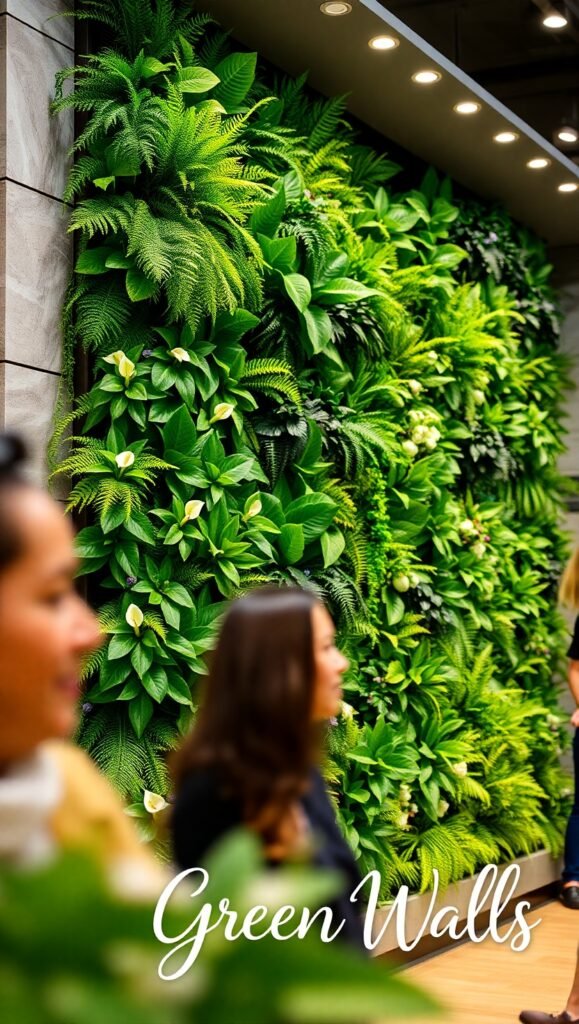
Vertical Gardening for Urban Living
- Maximize Space – Use narrow walls, balconies, and rooftops.
- Stress Reduction – Surrounding yourself with greenery reduces anxiety.
- Noise Control – Dense plant walls act as natural sound barriers.
- Urban Farming – Grow your own vegetables in cities where space is limited.
Cost-Effective Vertical Gardening Ideas
- Repurpose old furniture like shoe racks or bookshelves.
- Use inexpensive fabric pockets for herbs.
- DIY self-watering bottles for irrigation.
- Save money long-term by growing your own food.
Common Mistakes to Avoid
- Overwatering – Roots can rot in vertical gardens if drainage is poor.
- Wrong Plant Choices – Avoid heavy, deep-rooted plants that struggle vertically.
- Ignoring Sunlight Needs – Plants won’t thrive if light requirements aren’t met.
- Weak Structures – Make sure walls and frames are strong enough to support the garden’s weight.
Conclusion
Vertical gardening is more than just a clever way to save space—it’s a lifestyle shift that brings beauty, health, and sustainability into your daily life. Whether you’re adding a herb wall to your kitchen, creating a lush balcony retreat, or designing a full outdoor living wall, the possibilities are endless. With the right planning and creativity, any space can become a thriving green sanctuary.
1.What are the easiest plants for a beginner’s vertical garden?
Spider plants, pothos, herbs like mint and basil, and succulents are great for beginners.
2.Can vertical gardens replace traditional gardens?
Not entirely, but they’re perfect for small homes or as a complement to larger gardens.
3.How do I prevent water from dripping indoors?
Use drip trays, waterproof panels, or self-watering systems to manage water flow.
4.Can I grow fruits in a vertical garden?
Yes—strawberries, dwarf tomatoes, and small peppers thrive vertically.
5.. Do vertical gardens need special soil?
Not always. Standard potting soil works, though hydroponic systems skip soil entirely.